

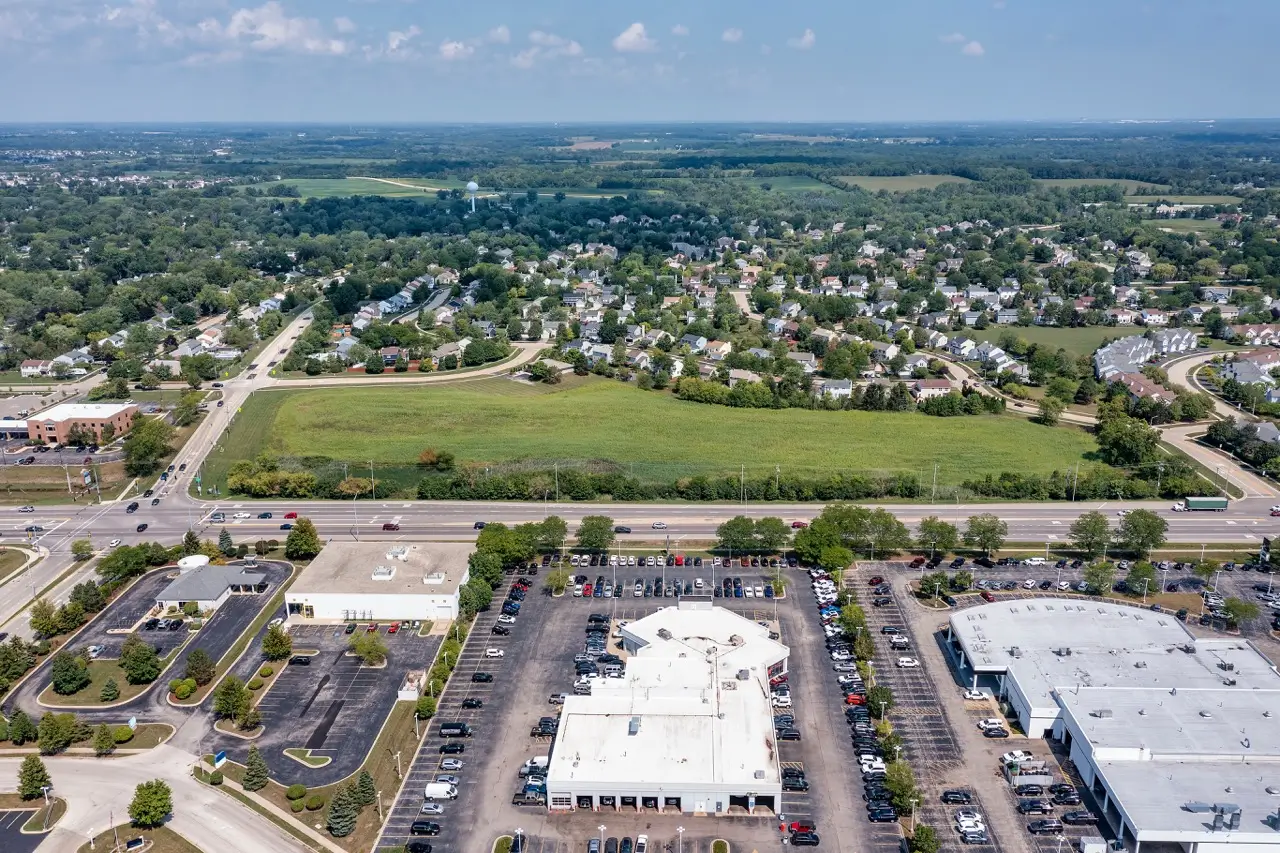
Are you self-employed in Logan or the Gold Coast and struggling to secure a commercial property loan due to tax 'write-offs'? Discover the 3 essential commercial loan types—from Full Doc to Low Doc and SMSF options—and learn exactly how much deposit you need (the answer might surprise you) to finance your business's next asset in the Logan and Gold Coast region.
Commercial property loans in areas like Logan and the Gold Coast fall into a few primary categories, catering to different financial situations and business structures. The type of loan you choose directly impacts the required deposit and the documentation needed.
1. Standard (Full Doc) Commercial Loan
Who is it for? Established businesses and investors who can provide full financial documentation, including tax returns and financial statements.
What is it? This is the most common and often most cost-effective loan type. Lenders rely on a full review of the business's or investor's financial health, cash flow, and tax history to assess the application.
Local Context: For well-established commercial properties in high-demand zones within Logan or the Gold Coast, a full documentation loan typically offers the sharpest interest rates and best terms.
2. Low Documentation (Low Doc) Commercial Loan
Who is it for? Self-employed business owners and investors who have strong cash flow but may struggle to prove their income with traditional tax returns due to 'write-offs' or recent business restructuring.
What is it? Low Doc loans require less financial paperwork. Instead of full tax returns, lenders usually accept alternative proof of income, such as:
- A borrower-completed Income Declaration Form.
- Business Activity Statements (BAS).
- Business Bank Statements (typically the last 6-12 months).
- A letter from an accountant.
Why is it important for self-employed in our region? The Logan and Gold Coast region has a high concentration of successful small business owners and self-employed people. Low Doc options are critical for those who want to invest using their business's genuine earning capacity, even if their taxable income is minimised. These loans carry a slightly higher risk for the lender, which is typically offset by a lower maximum Loan-to-Value Ratio (LVR) and a marginally higher interest rate.
3. SMSF Commercial Property Loan
Who is it for? Investors looking to purchase a commercial property within their Self-Managed Superannuation Fund (SMSF).
What is it? This is a specialised loan product known as a Limited Recourse Borrowing Arrangement (LRBA). It allows the SMSF to borrow funds to buy commercial property, which can be an excellent long-term investment or a way for a business owner to purchase their premises through their super fund. The "limited recourse" nature protects the rest of the SMSF's assets if the loan defaults.
Compliance Note: SMSF loans are subject to strict Superannuation laws and are more complex than standard lending. It's essential to get advice from a financial advisor or accountant to ensure the property meets the 'sole purpose test' for providing retirement benefits.
What Deposit is Required for a Commercial Property Loan?
The deposit required for commercial property is significantly higher than for a residential home loan. This is measured by the Loan-to-Value Ratio (LVR), which is the percentage of the property value the lender is willing to finance.
Typical Loan-to-Value Ratios (LVRs) and Deposit Ranges
Loan TypeMaximum LVR (Approx.)Minimum Deposit RequiredStandard (Full Doc)70% – 80%20% – 30%Low Doc60% – 70%30% – 40%SMSF Commercial Loan60% – 75%25% – 40%
Export to Sheets
Note: These figures are indicative. The actual LVR depends heavily on the lender, your financial strength, and the specific location and type of commercial property (e.g., a retail shop, industrial warehouse, or specialised medical centre).
Factors Influencing Your Deposit Requirement
For Logan, Beenleigh, and Gold Coast properties, the following factors play a crucial role in determining the final deposit:
- Property Type: A 'vanilla' commercial property like a standard office space or a basic industrial warehouse with a strong lease will generally secure a higher LVR (lower deposit) than a 'specialised' property like a motel, petrol station, or a property that relies on one specific tenant/business type.
- Lender Appetite: Lenders have different risk profiles for commercial properties. Some may offer a higher LVR (up to 80% for full doc) on a prime commercial asset in a growing Gold Coast suburb, while others may cap it at 65% for a property in a less-established industrial zone in Logan.
- Borrower Strength: A borrower with a strong financial history, a high net worth, and a proven track record of managing property or business debt will generally be offered better terms and a higher LVR (lower deposit) than a first-time commercial investor.
- Additional Security: If you own a residential property (like your home in Tamborine) with significant equity, some lenders may allow you to use this as additional security to achieve a higher LVR on the commercial purchase, effectively reducing your required cash deposit.
Don't Forget the Costs!
Your deposit is just the start. When calculating the total funds required, you must factor in purchasing costs, including:
- Stamp Duty: This is a major cost and varies by the purchase price in Queensland.
- Legal/Conveyancing Fees: Essential for the commercial contract.
- Valuation Fees: Commercial valuations are typically more expensive than residential ones.
- Lender Fees: Loan establishment or application fees.
Partner with a Local Expert: Ferns Finance Brokers
Navigating the commercial lending landscape—especially with its higher deposits and complex loan types—requires a local expert. At Ferns Finance Brokers, we serve the Logan, Beenleigh, Tamborine, and Gold Coast communities, giving us a deep understanding of local property values and lender preferences for this region.
We can assess your unique situation, whether you are:
- A self-employed business owner needing a Low Doc option.
- A property investor looking to leverage an SMSF.
- A seasoned developer seeking the best Standard Commercial terms.
Our goal is to connect you with the right lender and loan structure to ensure your commercial investment is financially sound and helps you achieve your business or wealth-building goals.
Ready to discuss your commercial property finance?
Contact Ferns Finance Brokers today for a no-obligation consultation on your commercial property finance options. Let us help you find the best loan to secure your next asset in Logan and the surrounding areas.
Helpful links.
Ready to get started?
Start applicationLet’s chat today to find the right solution for you.
Let’s chat today to find the right solution for you. Whether it's your first home, a growing business, or a new vehicle, Gwen and the Ferns Finance team are here in Beenleigh, Logan, Scenic Rim, and on the Gold Coast to offer expert, obligation-free advice tailored to your goals.
Related articles that may interest you
%20Large.jpeg)
Refinancing in Logan: How to Reduce Mortgage Stress and Improve Your Cash Flow
If your home loan is more than a couple of years old and you haven't reviewed it lately, there's a good chance you're paying more than you need to. The good news? Refinancing in Logan right now could be one of the smartest financial moves you make this year. Here's everything you need to know — from how it works, to what it could mean for your family's budget.
Is It Worth Refinancing in Logan Reserve in 2026? Your Local Guide
With the Logan property market undergoing a massive "structural reset" and interest rates showing unexpected movement early this year, many homeowners in Logan Reserve, Beenleigh, and Tamborine are asking the same question: Is now the right time to switch?At Ferns Finance Brokers, we believe that refinancing isn’t just about chasing a lower number on a screen; it’s about making your money work harder for your specific life stage—whether you’re a first home buyer looking for breathing room or a self-employed business owner in the Gold Coast hinterland funding your next venture.The Short Answer: Is Refinancing Worth It Right Now?Yes, refinancing in Logan Reserve is currently worth it for many households, but for different reasons than in previous years. While 2025 saw a series of rate cuts, the Reserve Bank of Australia (RBA) increased the cash rate to 3.85% in February 2026. This shift means the "loyalty tax" (the higher rate banks charge existing customers compared to new ones) is growing.By reviewing your loan now, you can often secure a "new customer" rate that offsets recent hikes, or unlock the substantial equity built up from Logan Reserve’s 13.9% annual house price growth.

Securing Asset Finance with an ABN in Logan Reserve: A Guide for Local Tradies and Small Businesses
Can you really secure equipment finance in Logan with a brand-new ABN or no recent tax returns? For many local tradies in Logan Reserve and Beenleigh, waiting two years for a traditional bank approval isn't an option when there’s work to be done today. Whether you need a new ute for the Gold Coast commute or an excavator for a Park Ridge development, specialised ABN finance is the key. Discover how low-doc loans and the 2026 Instant Asset Write-Off can help you upgrade your tools without draining your cash flow. Is it time to stop dreaming and start digging?